
Why Do Dogs Lick Each Other? Here's What They're Actually Saying
Jump to
They sniffed each other for about ten seconds — the standard introduction. Then the other dog started licking Ruby's face.
Not a quick polite lick. A full commitment. Eyes. Ears. Mouth. The whole face.
Ruby sat there and took it with the patience of someone who has been through this before.
The other dog's owner looked mortified. "I'm so sorry, she does this to every dog she meets."
I wasn't bothered. But I was curious.
Why does one dog lick another dog's face like that? What's actually being communicated?
So I went down the rabbit hole. Turns out there's a lot more going on than it looks.
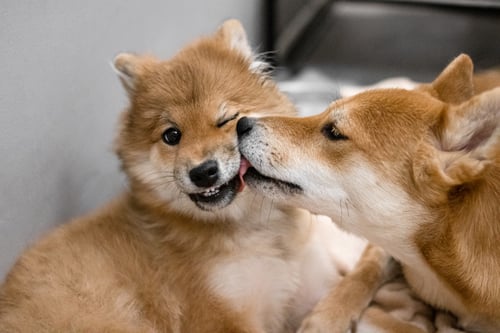
Dogs lick each other constantly. Faces. Ears. Mouths. The occasional spot that makes everyone in the room uncomfortable. And most people assume it's just affection — dogs being friendly dogs.
It's that. But it's also a lot of other things happening at the same time. Dog licking is a full language. Once you know how to read it, you start seeing conversations everywhere. If you've ever wondered about other subtle dog signals too, this connects really well with things we do that affect our dogs more than we realize.
Key Takeaways
- Licking is communication first, affection second. Dogs use licking to send very specific social signals to each other.
- It starts in puppyhood. The behavior is hardwired from birth — puppies lick their mothers and it stays with them for life.
- The mouth lick is especially meaningful. It's rooted in wolf behavior and carries a specific social message.
- Not all licking is friendly. Some licking is appeasement — a dog saying "please don't react, I come in peace."
- When to intervene. If one dog is clearly uncomfortable, the licking becomes obsessive, or it causes irritation — step in.
It Starts Before They're Even Aware Of It
The first lick a dog ever experiences is from their mother.
From the moment they're born, mother dogs lick their puppies to clean them, stimulate breathing, and bond with them. The puppies respond by licking back — to signal hunger, to seek comfort, to communicate need.
That foundation never goes away. Licking gets wired into their communication system before they even open their eyes. By the time a dog is interacting with other dogs at the park, licking another dog's face isn't a random impulse — it's a deeply ingrained social behavior with roots going back thousands of years.
Ruby sitting patiently while another dog licked her entire face at the park? She wasn't just tolerating it. She was reading it. Processing everything that lick was communicating.
IMAGE HEREWhy Dogs Lick Each Other — Every Reason
Affection and Social Bonding
The most straightforward reason — and a real one. Dogs who like each other lick each other. It's a physical expression of comfort and connection, the same way humans might put an arm around a friend.
Ruby does this with dogs she's comfortable with. After an initial meeting that goes well, she'll settle in next to another dog and start grooming their ears or face. That's not just hygiene — that's her saying we're good, I like you, I'm relaxed around you.
Mutual licking between dogs who know each other well is one of the purest forms of canine social bonding. It's the same mechanism as the oxytocin loop we see between dogs and humans — physical contact that creates and reinforces connection.
Submission and Respect
In dog social dynamics, licking is one of the clearest submission signals that exists. A less dominant dog licking a more dominant dog is saying — in very plain language — I acknowledge you, I'm not a threat, we're good here.
It comes from wolf pack behavior where lower-ranking wolves would lick the faces of higher-ranking pack members as a form of deference and respect. Domestic dogs kept the behavior because it works. It communicates something important without requiring any kind of conflict.
When Ruby encounters a dog who is very confident or assertive, she will often do a quick face lick early in the interaction. Not from fear — from social intelligence. She's smoothing things over before they need smoothing.
The Mouth Lick — A Wolf Behavior
This is the one that looks strangest to humans and has the deepest roots.
Wolf puppies lick the mouths of adult pack members to stimulate food regurgitation — it's how they get fed when they can't hunt themselves. The adult wolf returns from a hunt, the puppy licks their mouth, the adult regurgitates partially digested food. That's the original function.
Domestic dogs no longer need this behavior for food. But the mouth lick persisted as a social greeting — a way of saying hello, I'm excited you're here, I acknowledge you. When a dog licks another dog's mouth or lips at a greeting, that's ancient wolf communication happening in your living room.
The dog at the park who went straight for Ruby's mouth wasn't being weird. She was being very, very dog.
Appeasement — The "Kiss To Dismiss"
This one is counterintuitive. Sometimes a dog licks another dog not out of affection — but because they want the other dog to back off.
It's called appeasement licking or a "kiss to dismiss." The dog doing the licking is saying — please don't escalate this, I'm not a threat, can we just move past this moment. It's a de-escalation strategy. A peace signal.
The tell is context. Appeasement licking often happens when a dog is feeling crowded, pressured, or slightly anxious about another dog's behavior. The lick isn't warmth — it's a social tool to prevent things from going sideways.
Ruby uses this occasionally with dogs who get in her personal space too aggressively. A quick lick on their face and then she steps away. Translation: we're fine, but I need some room.
Grooming
Dogs groom each other. It's practical, it's social, and it targets the spots a dog can't easily reach themselves — behind the ears, the back of the neck, the top of the head.
Mutual grooming between dogs who are comfortable with each other is a sign of a well-established bond. It's not random licking — it's deliberate and focused. Ruby will spend several minutes on another dog's ears if they let her. It's one of her favorite things.
Dogs who groom each other are also reinforcing their bond through touch. The grooming is functional and social simultaneously. And dogs who have good outlets for energy and stimulation tend to do better socially too, which is part of why I like things like puzzle toys for keeping dogs balanced outside of social settings.
Information Gathering
Dogs get information through licking. Taste and scent together tell them things that a sniff alone doesn't.
Licking another dog's face, ears, or body gives them information about that dog's health, emotional state, what they've been eating, where they've been, and potentially their reproductive status. It's a full data download in a few seconds.
When a dog meets another dog and goes straight into licking — they're not just being friendly. They're reading them. Getting information. The lick is both a social gesture and a sensory investigation happening simultaneously.
Anxiety Or Stress
Sometimes repetitive licking of another dog is a self-soothing behavior driven by anxiety. The licking itself is calming — it releases endorphins and gives the anxious dog something to focus on.
The tell here is the quality of the licking. Relaxed social licking looks different from anxious compulsive licking. The anxious version is more relentless, more focused, and continues even when the other dog is clearly over it.
If your dog is licking another dog obsessively and the other dog keeps moving away or showing signs of annoyance — that's worth paying attention to. It may say more about your dog's stress levels than their affection for the other dog. In those situations, I’ve looked into options from Nutramax’s supplement line for that kind of support.
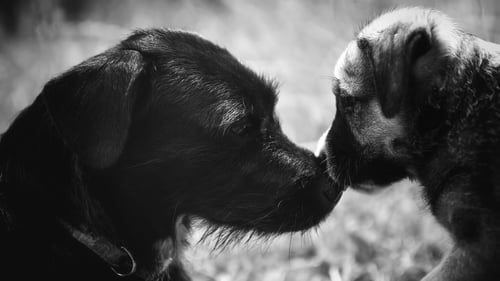
Why Dogs Lick Each Other's Ears Specifically
Ears get a lot of attention. And there are a few specific reasons for it.
Earwax Has A Taste
Dogs find earwax interesting. The scent and taste carries information about the other dog. Some dogs are genuinely drawn to it the way they're drawn to any interesting smell.
Ears Are Hard To Reach
A dog can't clean their own ears easily. Another dog licking their ears is practical grooming — getting a spot that genuinely benefits from attention.
It's A Trust Signal
Allowing another dog access to your ears is a significant trust gesture. The ears are sensitive and vulnerable. A dog who lets another lick their ears is saying — I trust you completely.
Watch For Infections
Excessive ear licking can sometimes signal an ear infection in the dog being licked — their ears smell different and another dog picks up on it. If your dog suddenly becomes obsessed with another dog's ears, it's worth checking them. I’ve used things from PetMD’s care line when dealing with ear or skin-related issues.
When To Step In
Most dog-to-dog licking is completely fine and should be left alone. But there are times to intervene.
Step In When:
- The dog being licked is clearly uncomfortable — moving away, growling, showing stiff body language
- The licking is obsessive and won't stop even when the other dog moves away repeatedly
- It's causing skin irritation — redness, hair loss, or sore spots from constant moisture
- The licking escalates into mounting or other unwanted behavior
- One dog seems to be using it to bully or crowd the other
- Your dog suddenly becomes obsessively focused on another dog's ears — check for infection
The key signal is always the dog being licked. If they're relaxed and engaged — that's a conversation happening between consenting parties. If they're moving away, avoiding, or showing stress signals — that's worth redirecting. Sometimes just creating space and resetting with a short walk using a comfortable harness and leash helps a lot.
The Bottom Line
Every time Ruby licks another dog's face, something specific is being said. Affection. Respect. Information gathering. Appeasement. Grooming. Sometimes all of the above in the same interaction.
Dog-to-dog licking is a language. One that was refined over thousands of years of social evolution. It looks simple. It isn't. If you like noticing these smaller dog communication moments, this also pairs really well with why dogs get the zoomies.
The dog at the park who licked Ruby's entire face wasn't being weird. She was having a full conversation — in the only language she has.
Ruby understood every word.
Frequently Asked Questions
Why do dogs lick each other?
Dogs lick each other to communicate, bond, groom, and gather information. It can signal affection, submission, appeasement, or just friendly social connection. The behavior is rooted in wolf pack dynamics and reinforced from birth through a puppy's relationship with their mother. It's one of the most versatile social tools dogs have.
Why do dogs lick each other's mouths?
Mouth licking traces directly back to wolf behavior — wolf puppies licked adults' mouths to trigger food regurgitation. Domestic dogs kept the behavior as a greeting and submission signal. When a dog licks another dog's mouth or lips it's saying hello, I acknowledge you, I'm not a threat. It's ancient communication that survived thousands of years of domestication.
Why do dogs lick each other's faces and ears?
Face licking is social bonding and communication. Ear licking is a mix of grooming — ears are hard for a dog to clean themselves — and information gathering, since earwax carries scent information. It's also a significant trust signal. A dog who allows another to lick their ears is showing complete comfort and trust in that relationship.
Why is my dog licking my other dog all of a sudden?
A sudden increase in licking between dogs who know each other can mean several things — increased affection or bonding, one dog sensing that the other is unwell or stressed, anxiety in the licker using the behavior as self-soothing, or the licker detecting something different about the other dog's scent. If it's truly sudden and obsessive, a vet check for both dogs is worth considering.
Why do dogs lick each other after fighting?
Post-conflict licking is appeasement and reconciliation. The dog doing the licking is signaling that the conflict is over — I'm not a threat, we're okay, let's move forward. It's a peace-making behavior that helps dogs re-establish social harmony after tension. It's actually a healthy sign that the relationship can recover from conflict.
Why do dogs lick each other's private parts?
Information gathering. The groin area carries a high concentration of scent information — health status, reproductive status, emotional state. Dogs lick these areas as part of a full social and sensory investigation of another dog. It's not sexual behavior — it's information-seeking behavior that humans find uncomfortable but dogs find perfectly normal and useful.
Should I let my dogs lick each other?
Generally yes — as long as both dogs are comfortable with it. Mutual licking is healthy social behavior. The only time to intervene is when one dog is clearly unhappy about it — moving away, showing stress signals, or growling — or when the licking becomes obsessive and causes skin irritation. Let them communicate. Just watch for the signals that say it's gone too far.
Ruby came home from the park and immediately groomed her own paws.
Then she looked at me.
Then she licked my hand once.
I think that was a hello.
Or an I love you.
With Ruby, those are usually the same thing.
Give your dog some love today. 🐾
Welcome to The Pack. 🐾


