
Why Do Dogs Have Wet Noses? The Science Behind It Will Surprise You
Jump to
Like she does every morning.
I've felt that nose ten thousand times. Always cold. Always wet. I've never once thought about why.
So this morning I actually stopped and thought about it. That nose — that specific, always-wet, always-cold nose — is doing something extraordinary every single second of every single day.
And most of us have no idea what it actually is.
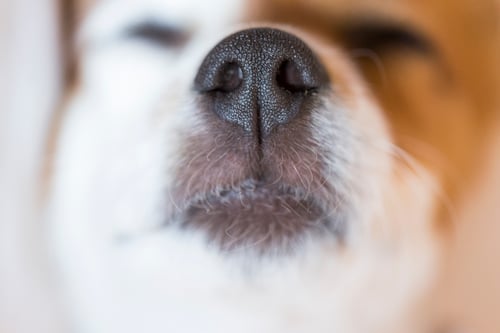
The wet nose question is one of those things everyone knows the surface answer to — "it helps them smell better" — but almost nobody knows the full story.
Turns out the full story is genuinely fascinating. And Sage's nose, pressed into my hand at 6 AM, is one of the most sophisticated sensory instruments on the planet. If you like this kind of “everyday dog thing that’s way deeper than it looks” rabbit hole, this also pairs really well with everyday things that affect our dogs more than we realize.
Key Takeaways
- The wetness isn't random. It's a precisely engineered system that makes their sense of smell exponentially more powerful.
- Dogs lick their noses constantly for a reason. They're transferring scent molecules to a secondary sensory organ inside their mouth.
- A dry nose isn't automatically a problem. Most dogs wake up with a dry nose. Context matters far more than moisture level.
- The nose helps regulate body temperature. Dogs don't sweat through their skin — the nose is part of how they stay cool.
- When to pay attention. Cracked, crusty, or persistently dry nose with other symptoms deserves a vet conversation.
Why The Nose Is Wet — The Real Explanation
The Moisture Traps Scent Molecules
Here's the mechanism. The thin layer of mucus on a dog's nose actively traps and absorbs scent molecules from the air. Those molecules dissolve into the moisture and get pulled into the nasal passages where the 300 million olfactory receptors can process them.
A dry nose is a less efficient nose. The wetness isn't incidental — it's the whole system. Without it, Sage's ability to track a scent trail, read the environment, or identify what happened in a space hours ago would be significantly reduced.
Think of it like this. A dry sponge doesn't pick up much. A wet sponge picks up everything. Sage's nose is a wet sponge pointed at the world, all day, every day.
Licking Transfers Scent To A Second Sensor
This is the part that genuinely surprised me. Dogs lick their noses constantly — and it's not just to keep them clean. When Sage licks her nose, she's transferring scent molecules from the mucus to the roof of her mouth where a specialized organ called the Jacobson's organ (or vomeronasal organ) processes them separately.
The Jacobson's organ picks up chemical signals that the regular olfactory system might miss — pheromones, subtle molecular information, things that exist below even a dog's normal scent detection threshold.
So every time you see Sage lick her nose, she's not just grooming. She's running a second sensory analysis on whatever she just smelled. Two systems working in parallel. Every single lick.
Temperature Regulation
Dogs don't sweat through their skin the way humans do. They regulate temperature through panting — and through their nose. The evaporation of moisture from the nose surface helps dissipate heat.
It's not the primary cooling mechanism — panting is. But the nose contributes. On a hot day, the moisture on Sage's nose is doing quiet background work keeping her core temperature regulated.
This is also why a dog's nose running more than usual on a hot day isn't necessarily alarming — it can be the body producing extra moisture to support cooling. Keeping fresh water around in a solid setup like this bowl helps more than most people think.
Environmental Exposure
Sometimes the nose is wet because the dog just stuck it in something wet. Grass covered in morning dew. A puddle investigation. Snow. The water bowl after a drink.
Sage comes inside with a dramatically wet nose after morning walks through wet grass. That's not biology — that's just Sage being thorough in her investigative process. The nose goes in first. Always. A comfortable harness and simple leash make those early-morning outings a lot easier too.
This version of wet nose is the most obvious and the least interesting. But it accounts for a meaningful percentage of the "why is my dog's nose so wet right now" moments.

The Dry Nose Myth — What's Actually True
The most persistent dog health myth going. "Dry nose means sick dog." Said confidently by well-meaning people everywhere. And mostly wrong.
Wet Nose vs Dry Nose — What Actually Matters
Context is everything. Here's the actual guide.
| What You're Seeing | What It Means | What To Do |
|---|---|---|
| Dry nose after waking up | Completely normal | Nothing — it'll wet back up on its own |
| Wet nose, normal behavior | Healthy and functioning | Nothing |
| Persistently dry nose all day | Could be dehydration or environment | Check water intake, monitor behavior |
| Cracked or crusty nose | Possible dryness issue, allergies, or autoimmune | Vet conversation if persistent |
| Clear runny nose | Usually allergies or irritants | Monitor — vet if it persists or worsens |
| Thick yellow or green discharge | Possible infection | Vet visit |
| Blood from the nose | Needs immediate attention | Vet immediately |
When To Actually Pay Attention
See Your Vet If:
- The nose is persistently cracked, crusty, or bleeding
- There's thick yellow or green discharge that doesn't clear up
- The dry nose comes with other symptoms — lethargy, loss of appetite, vomiting
- Your dog is pawing repeatedly at their nose or face
- There's swelling around the nose or muzzle
- The nose texture or color has changed significantly and stays changed
If the issue is just surface dryness and your vet isn't concerned, something gentle from PawSono’s paw and nose balm line can help protect the skin while it heals. If you're also dealing with irritation around the nose or face, I’ve used products from PetMD’s care line for that kind of thing too.
The Bottom Line
Sage's wet nose is not an accident or a quirk. It's a precision instrument — part of a sensory system so sophisticated that we still don't fully understand everything it can do.
The moisture traps scent molecules. The licking transfers them to a second organ for parallel processing. The evaporation helps regulate temperature. The whole system runs continuously, quietly, every second of every day.
That cold wet nose pressed into your hand first thing in the morning? That's one of the most advanced biological sensors on the planet saying hello. If you're into this kind of dog-science stuff, you’ll probably also like digging around the GREET Dog blog.
Feels different knowing that.
Frequently Asked Questions
Why do dogs have wet noses?
The moisture on a dog's nose traps and absorbs scent molecules from the air, making their already extraordinary sense of smell even more effective. Dogs also lick their noses constantly to transfer those scent molecules to a secondary sensory organ called the Jacobson's organ in the roof of their mouth. The wetness is a feature, not a coincidence.
Does a wet nose mean a dog is happy or healthy?
Not necessarily. A wet nose is normal and usually indicates a functioning sensory system — but it's not a reliable standalone health indicator. A dog can have a wet nose and be unwell. A dog can have a temporarily dry nose and be perfectly fine. Read the whole dog — energy, appetite, behavior — not just the nose.
Why do dogs lick their noses?
Two reasons. First, to keep the nose moist and clean so the scent-trapping system keeps working. Second — and more fascinatingly — to transfer scent molecules from the nose mucus to the Jacobson's organ in the roof of the mouth, which processes chemical information the regular olfactory system might miss. Every nose lick is a second sensory scan.
Why does my dog put her wet nose on me?
She's reading you. The nose on your skin is gathering information — your scent, your emotional state, changes since she last checked. It's also a greeting and a connection gesture. Sage does it every morning. It's partly affection and partly a full sensory download on how I'm doing. Usually she seems satisfied with the results.
Why do dogs' noses run?
The nose produces mucus continuously as part of normal function. A small amount of clear discharge is completely normal. More runny than usual can be triggered by excitement, exercise, cold air, allergies, or irritants. Thick colored discharge or blood is when it moves from normal to worth checking with a vet.
Why is my dog's nose dry?
Most commonly because they just woke up — during sleep, nose licking stops and the moisture evaporates. A dry nose for the first 20-30 minutes after waking is completely normal. Other causes include dehydration, time spent in a warm dry environment, and sunburn in light-colored dogs. A persistently dry cracked nose that doesn't recover warrants a vet conversation.
Can dogs smell fear?
Research suggests yes — at least in a meaningful sense. Fear triggers physiological changes in humans including adrenaline release, changes in sweat composition, and shifts in body odor. Dogs can detect these chemical changes through their extraordinary sense of smell. Whether they interpret it as "fear" in a human sense is debated — but they're definitely picking up on something real.
Sage pressed her cold wet nose into my hand again just now.
I let her.
Three hundred million scent receptors saying hello.
I said hello back.
Give your dog some love today. 🐾
Welcome to The Pack. 🐾


